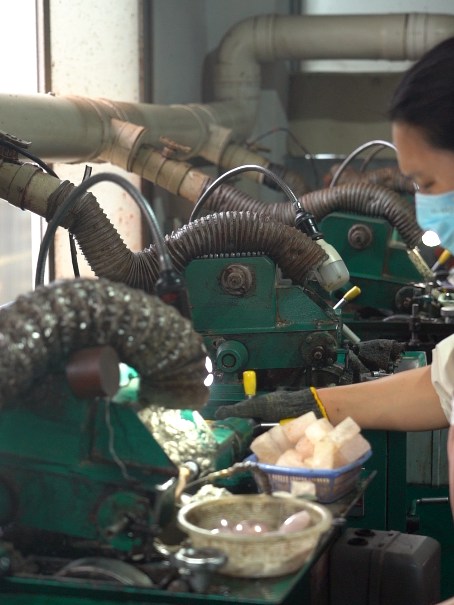
Der Reddit-Beitrag, der das Ganze ausgelöst hat
„Ich habe zum ersten Mal Chalcedon geschliffen. Sah toll aus bis zum letzten Poliergang – dann tauchte wie aus dem Nichts ein feiner Riss auf.“
Solche Beiträge tauchen regelmäßig in Foren für Edelsteinschleifer auf. Anfänger schleifen ihren ersten blauen Chalcedon-Cabochon, folgen den Anleitungen aus dem Internet und müssen mit ansehen, wie ihr Werk im letzten Arbeitsschritt auseinanderfällt..
Das Problem ist nicht der Stein. Es ist der HitzeChalcedon kann leicht kleine Risse verursachen, die sich im Laufe der Bearbeitung ausbreiten – ähnlich wie ein kleiner Steinschlag in einer Windschutzscheibe..
Hier erfahren Sie, wie Sie aus einem Rohling einen fertigen Cabochon schmieden, ohne dass Ihre Arbeit durch einen unerwarteten Riss ruiniert wird.
Bevor Sie beginnen: Machen Sie sich mit dem Material vertraut
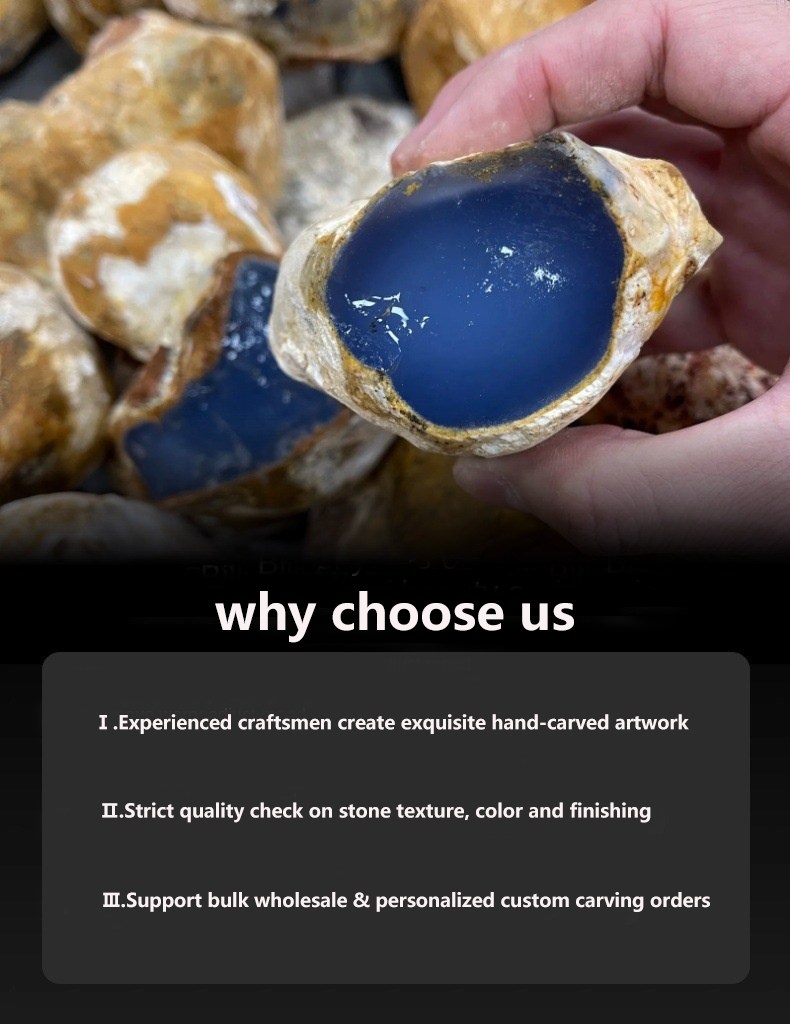
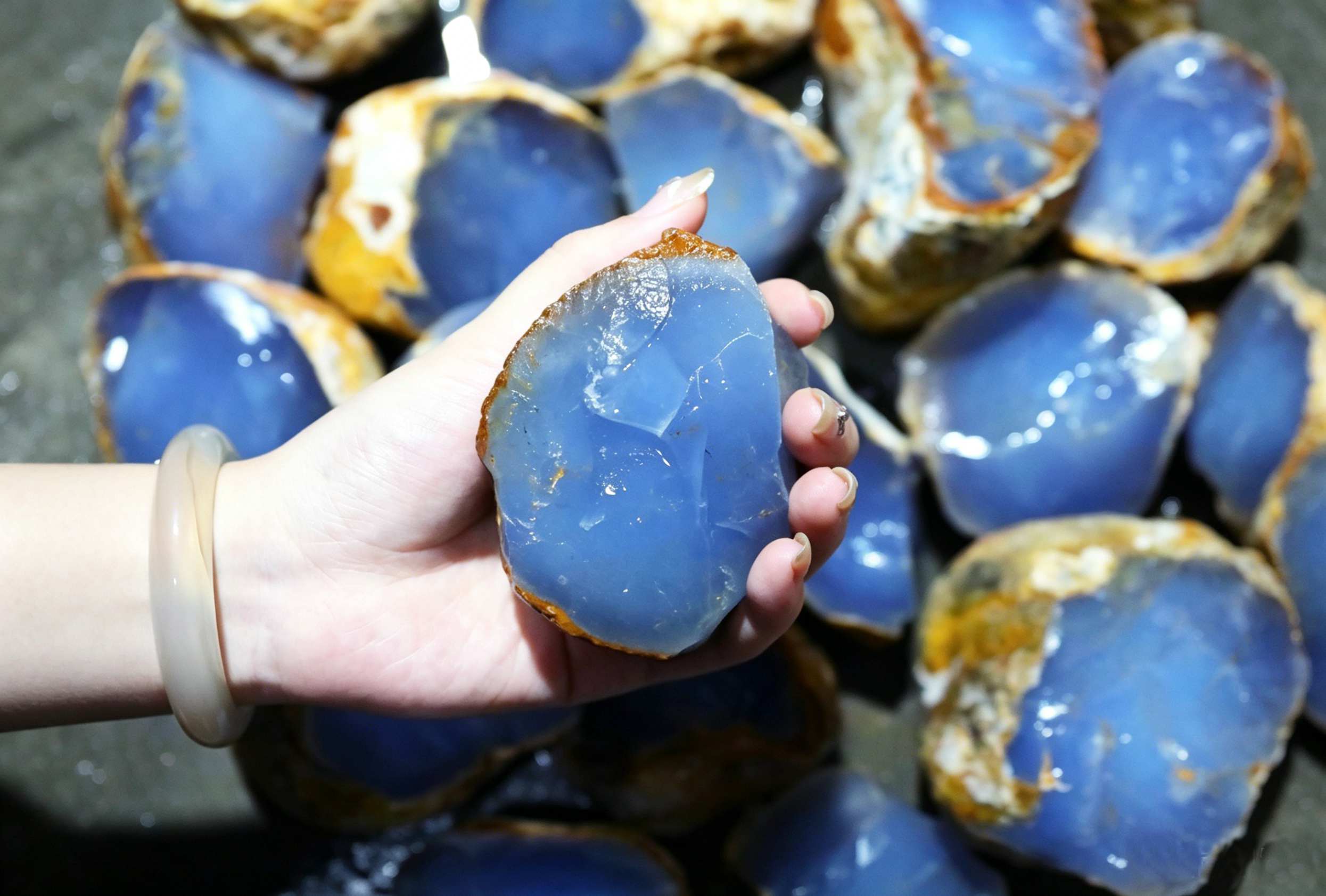
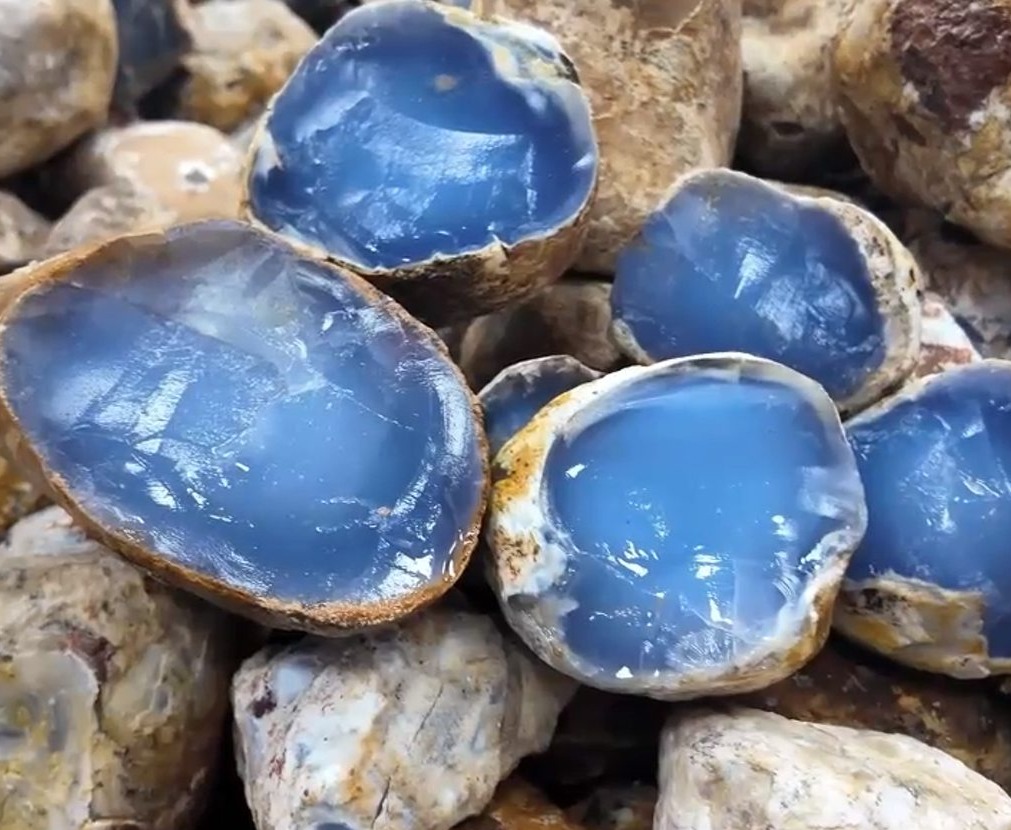
Blauer Chalcedon ist eine kryptokristalline Form von Quarz, die aus sehr feinen Verwachsungen von Siliziumdioxid besteht.Es bewertet 6,5–7 auf der Mohs-Skala — etwas weicher als kristalliner Quarz, aber seine dichte, kompakte Struktur verleiht ihm größere Festigkeit.
Wichtigste Eigenschaften:
Spezifisches Gewicht: 2,58–2,64
Bruch: Muschelförmig (schalenartige Kurven)
Spaltung: Keiner
Das Fehlen einer Spaltbarkeit ist eine gute Nachricht – es bedeutet, dass der Stein nicht entlang vorhersehbarer Ebenen spaltet. Muschelbruch bedeutet jedoch, dass er dürfen Es zerbricht bei glatten, gewölbten Oberflächen wie Glas, wenn man es falsch trifft oder es überhitzt..
Ungefährer Preis: Großhandel blauer Chalcedon grobe Bereiche von 14–300 US-Dollar pro Kilogrammabhängig von Qualität, Farbsättigung und dem Vorhandensein von BrüchenHochwertiges Material, das sich für Premium-Cabochons eignet, ist viel seltener – manche Lagerstätten liefern nur 5% ihrer Gesamtproduktion für hochwertige Cabochon- und Schnitzarbeiten.
Die acht Schritte
Schritt 1: Grobe Vorauswahl und Inspektion (Auswirkung auf den Ertrag: 15–40 % Verlust)
Bevor Sie etwas zuschneiden, untersuchen Sie das Rohmaterial. Achten Sie auf sichtbare Risse, Matrixeinschlüsse und Farbunterschiede.
Worauf Sie achten sollten: Blauer Chalcedon Rohmaterial, das als „Schmucksteinqualität“ bezeichnet wird, weist typischerweise fast keine Risse und sehr wenig Matrix auf.Doch Rohmaterial ist nicht gleich Rohmaterial. Manche Materialien weisen natürliche innere Risse auf, die die nutzbare Ausbeute verringern – was Ihre effektiven Kosten pro Cabochon erhöht.
Der Fehler: Schneiden ohne vorherige Prüfung. Ein Steinschleifer merkt an, dass bei blauem Chalcedon gilt: „Je tiefer er angeschnitten wird, desto heller ist die Farbe.“Schneidet man in die falsche Richtung, verliert der Stein seine Farbe, die ihn wertvoll macht.
Ertragsauswirkung: Für sauberes Material könnten Sie Folgendes behalten 60–75 % nach grober InspektionBei Material mit Brüchen sinkt dieser Wert auf 40–50 %.
Schritt 2: Plattenherstellung (Auswirkung auf den Ertrag: 20–30 % Verlust)
Schneiden Sie Ihr Rohmaterial mit einer Diamantsäge in Platten. Chalcedon sollte mit einer scharfen Diamantsäge bei einer Schnittgeschwindigkeit von etwa [Wert fehlt] geschnitten werden. 2.000 Fuß pro Minute.
Der Fehler: Die Verwendung einer stumpfen Klinge oder zu schnelles Schneiden führt zu Hitzeentwicklung und zum Bruch des Steins.
Wichtiger Tipp: Nachdem jede Platte zugeschnitten wurde, legen Sie sie in eine Schale mit Wasser, um zu verhindern, dass das Edelstein-Siliciumdioxid durch den Kontakt mit Luft bricht oder reißt..
Ertragsauswirkung: Die Sägeschnittbreite (die Breite des Schnitts) entfernt typischerweise 10–15 % des Materials. Absplitterungen und Brüche können einen weiteren Schaden verursachen. 10–15 %.
Schritt 3: Vorformlinge beschneiden (Auswirkung auf die Ausbeute: 10–20 % Verlust)
Schneiden Sie Ihre Rohlinge – die grobe Form Ihres Cabochons – mit einer Trennsäge mit dünnem Sägeblatt zu. „Kleinere Stücke bieten meiner Erfahrung nach das beste Preis-Leistungs-Verhältnis“, bemerkt ein erfahrener Steinschleifer. „Man sieht genau, was man bekommt, und kann es mit einer 25-cm-Trennsäge und einem dünnen Sägeblatt von Hand zuschneiden, um die größte Ausbeute zu erzielen.“.
Der Fehler: Zu nah an die endgültige Form heranzuschneiden, bevor man innere Brüche beurteilt hat, ist kontraproduktiv. Lassen Sie lieber etwas mehr Material stehen – Sie können immer noch mehr entfernen, aber nichts mehr hinzufügen.
Ertragsauswirkung: Rechnen Sie damit, einen weiteren zu verlieren. 10–20 % in diesem Stadium.
Schritt 4: Formen mit 80er-Körnung
Beginnen Sie mit dem Schleifen eines Stahlscheibe mit 80er KörnungLassen Sie mindestens 0,5 mm um die Kanten herum, falls der Stein auf der Rückseite absplittertBeginnen Sie damit, die Spitze zu wölben.
Der Fehler: Du drückst zu fest. Lass das Rad die Arbeit machen.
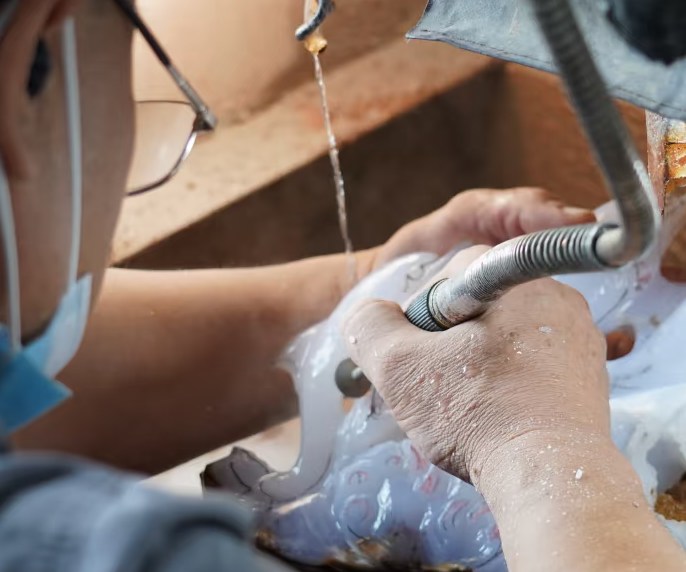
Hitzewarnung: Kühlen Sie den Stein mit reichlich Wasser. Hier entstehen bei vielen Anfängern die Mikrorisse, die das Werkstück später ruinieren.
Schritt 5: Feinschleifen mit 220er-Körnung
Bewegen Sie sich nach 220er Körnung BühneSchneiden Sie die Vorform etwas näher an den Rand heran, um eventuelle Absplitterungen an den hinteren Außenkanten zu beseitigen und die Oberseite zu glätten..
Der Fehler: Diese Phase sollte man nicht überstürzen. Kratzer vom 80er-Schleifpapier, die beim 220er-Schleifpapier nicht entfernt wurden, werden später sichtbar, und man muss zurückgehen.
Schritt 6: Weiche Harzscheiben (Körnung 280 bis 600)
Hier wird es bei Chalcedon knifflig. „Beim Wechsel zu den weichen Harzscheiben ist eine gute Wasserzirkulation immer wichtig, um den Cabochon kühl zu halten und Reibungswärme zu vermeiden.“.
Durcharbeiten 280er Körnung, Dann 600er Körnung Räder aus weichem Harz.
Der Fehler: Wenn der Stein heiß wird, kann Chalcedon leicht kleine Risse bekommen, die sich beim Bearbeiten ausbreiten.Wenn es einmal anfängt, ist das Spiel für dieses Stück meist gelaufen.
Profi-Tipp: „Eine gute Lichtquelle ist wichtig, insbesondere bei einfarbigen Schaltschränken, um eventuelle Fehler aufzuspüren, bevor man fortfährt.“Wenn Sie mit dem Schleifen auf der 600er-Körnung fertig sind, wird die Oberfläche bereits schön poliert sein und die tiefblaue Farbe zeigen..
Schritt 7: Abschließende Politur (14k Körnung)
Weiter zu 14k-Körnung-ScheibeFür die meisten ist dies ein guter Zeitpunkt, um aufzuhören. Sie sollten nun einen wunderschön polierten Cabochon haben, der bereit ist, in Schmuck verarbeitet zu werden..
Der Fehler: Überpolieren. Mehr ist nicht immer besser.
Schritt 8: Optionale Spiegelpolitur
Wenn Sie einen spiegelglatten Stein anstreben, verwenden Sie einen Lederpolierscheibe mit CeroxidCeroxid ist das Standardpoliermittel für Materialien der Quarzgruppe – Chalcedon, Achat und kristalliner Quarz lassen sich alle gut damit bearbeiten..
Wichtiger Warnhinweis: „Versuchen Sie, den Stein nicht zu überhitzen, um zusätzliche Risse zu vermeiden.“.
Der Fehler: Hitze ist in diesem Stadium fatal. Ein Riss, der beim abschließenden Polieren entsteht, bedeutet Totalverlust – die gesamte Arbeit der vorangegangenen sieben Schritte war umsonst.
Ausbeute: Was Sie tatsächlich behalten
Hier die bittere Wahrheit: Bei einem sauberen, facettierbaren Rohmaterial liegt die Ausbeute typischerweise zwischen 25 % und 33 % mit individuellem ZuschnittFür den Zuschnitt im Werk ist Folgendes zu erwarten: 15 % bis 25 %.
Speziell für Chalcedon – mit seinen natürlichen Brüchen, Matrixeinschlüssen und Farbzonierungen – schlagen viele Steinschleifer eine Figur von 20 % Retention und 80 % Verlust als realistische Ausgangsbasis.
Das bedeutet ein 1 kg Ein Stück Rohmaterial zu **40 $/kg** ergibt möglicherweise nur **200 g** fertige Cabochons. Ihre effektiven Materialkosten sind somit von 40 $ auf 200 $ pro Kilogramm Fertigware gestiegen.
Aber die fertigen Cabochons? Die können im Einzelhandel für 400–800 US-Dollar pro Kilogramm oder mehr. Der entscheidende Faktor ist das Geschick – und die Vermeidung von Materialverlusten durch Hitzerisse.
Der eine Tisch, den Sie brauchen
Fazit
Blauer Chalcedon ist ein wunderschöner, gut bearbeitbarer Stein, der sich hervorragend polieren lässt.Aber es verzeiht keine Hitze. Die beim Polieren entstehenden Risse sind kein Pech – sie sind das Ergebnis von Reibung, die Sie nicht kontrolliert haben.
Der globale Markt für Chalcedon-Schmuck wird voraussichtlich ein bestimmtes Niveau erreichen. 2,892 Milliarden US-Dollar bis 2031 bei einem 8,2 % CAGRDie Nachfrage ist da. Aber was nützt die Nachfrage, wenn die Ausbeute nur 10 % beträgt, weil man am letzten Rad immer wieder Steine zerbricht?
Den Stein kühl halten. In jeder Phase auf Mängel prüfen. Und die weichen Harzräder niemals überstürzen.


 English
 Français
 عربي
عربي Deutsch